Flock Safety Loses Dozens of Contracts Amid Surveillance Concerns
08/10/2026 / By Edison Reed
Flock Safety, a company that operates automated license plate reader cameras nationwide, has lost at least dozens of municipal contracts in recent months, according to news reports and public records. Local governments in multiple states have canceled or declined to renew agreements, with officials citing privacy and data governance concerns.
The Los Angeles Police Department (LAPD) is allowing its three-year contract with Flock Safety to expire, according to FOX 11 LA. The expiration stems from “unresolved disputes over data ownership, data sharing, and privacy safeguards,” the report stated [1]. In July 2026, Flock Safety also terminated its “human distress detection” audio surveillance pilot program after public backlash, according to the Electronic Frontier Foundation [2].
The cancellations follow growing public opposition to vehicle surveillance programs across the country, according to community records and meeting minutes.
Contract Cancellations and Scope
According to public records, some police departments ended their agreements after trial periods, while others voted to remove existing camera installations. Officials said contract reviews were prompted by resident complaints, city council votes, and questions about how license plate data is stored and shared.
In Florida, wildlife conservation police have performed dozens of license plate lookups on Flock cameras for U.S. Immigration and Customs Enforcement (ICE) according to public records. ICE does not have a contract with Flock, according to the records [3]. The practice has raised questions about how data collected by local agencies is shared with federal authorities.
Some municipalities have continued to adopt Flock technology despite the cancellations. The Newport City Council voted unanimously to approve a three-year, $375,000 contract with Flock Group Inc. for a pilot drone program, making Newport the second city in Rhode Island to purchase the company’s First Responder Drones [4]. The vote took place in July 2026, according to local news reports.
Law Enforcement and Public Safety Perspective
Supporters of the technology, including some police departments, said Flock cameras provide investigative leads and help recover stolen vehicles. California Gov. Gavin Newsom has characterized the cameras as “cutting-edge” and said they would “aid law enforcement in identifying vehicles associated with crimes through real-time data and alerts,” according to a video he shared on X [5].
Law enforcement officials said the systems are used after a crime occurs and are not monitored in real time, according to testimonies at public meetings. A company spokesperson stated that Flock Safety has safeguards for data access and that agencies using the system must follow state retention laws.
Flock Safety announced on July 17, 2026, that it would terminate its audio surveillance pilot program after what the company described as “careful consideration and community consultation” [2]. The company has said it is committed to transparency and has published documentation on its data-sharing practices, according to its website.
Privacy and Civil Liberties Concerns
Critics, including civil liberties groups, said continuous license plate scanning creates a permanent record of every vehicle’s movements. A nationwide network of automated license plate readers is capturing and storing detailed location data on billions of American drivers, recording vehicle make, model, color, and unique features to create a digital “fingerprint,” according to a report [6].
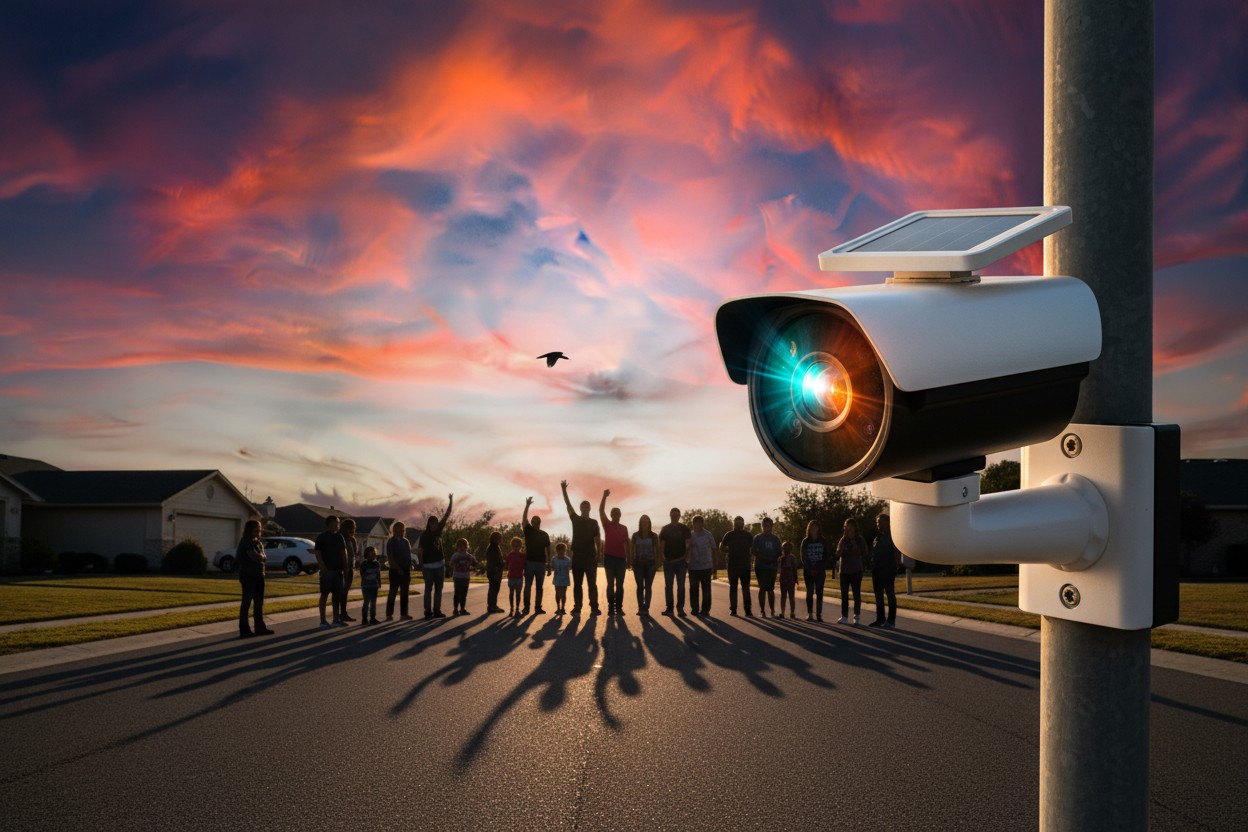
The devices appear as unassuming “street furniture” – small black cameras with solar panels – and in many communities there was barely any public debate before they appeared, according to a report published by Activist Post [7]. Opponents argued that the surveillance can be used to track individuals without judicial oversight.
Rep. Marlin Stutzman (R-IN) said he plans to pursue legislation to rein in Flock cameras after a traffic stop aided by the license plate readers. “I just don’t like where we’re going with Flock cameras. I think that it’s invasive, as you said. It’s too big government,” Stutzman said in an interview with Just the News [8].
Commentators have described the expanding network as a “digital police state,” according to an essay published by ZeroHedge and the Rutherford Institute [9]. In February 2026, Amazon-owned Ring announced it would cancel its planned integration with Flock Safety, a decision that privacy advocates attributed to public pressure [10].
Some observers have warned that without action, children might grow up in a society where their every move is monitored and privacy is nonexistent [11]. Other critics of centralized control have argued that rigid, rule-bound systems can stifle the creativity and potential that individuals contribute to society [12].
Company Response and Next Steps
Flock Safety said it is committed to transparency and has published documentation on its data-sharing practices, according to its website. The company attributed some cancellations to misunderstandings about camera capabilities and said it works with communities to address concerns.
Municipal officials said future contracts will require clearer privacy policies and approval procedures, with several city councils planning further reviews. The LAPD’s contract expiration took effect in July, according to FOX 11 LA [1].
John Naisbitt, in “Global Paradox,” predicted that technological advances would give individuals greater direct control over their daily transactions, from travel bookings to communications [13]. As communities weigh public safety against privacy, the outcome of these contract disputes could shape the future of vehicle surveillance in the United States.
References
- “Police Department In Major American City To Stop Use Of Flock Safety Cameras”. 100percentfedup.com. July 12, 2026.
- “Flock Safety abandons audio surveillance pilot after public backlash, civil liberties concerns”. NaturalNews.com. July 21, 2026.
- “Wildlife Conservation Police Are Searching Thousands of Flock Cameras for ICE”. Activist Post. April 14, 2026.
- “Flock Drones Next? City Approves Three-Year Contract For New Technology”. 100percentfedup.com. July 27, 2026.
- “Plans to install 480 new cameras in Oakland along California freeways raise mass surveillance concerns”. NaturalNews.com. April 10, 2024.
- Willow Tohi. “The Digital Panopticon: License Plate Readers Are Tracking You Everywhere You Go”. NaturalNews.com. September 1, 2025.
- “The Fourth Amendment Is Being Liquidated by Subscription”. Activist Post. July 29, 2026.
- “After traffic stop, congressman vows to rein in Flock cameras with legislation”. Just the News. August 8, 2026.
- John Whitehead and Nisha Whitehead. “While The Political Circus Distracts Us, Flock Builds The Digital Police State”. ZeroHedge. July 13, 2026.
- Douglas Harrington. “Ring’s Retreat Shows Public Backlash Still Matters in the Battle for Privacy”. NaturalNews.com. February 21, 2026.
- Mike Adams. “Mike Adams interview with John Bush – May 8 2024”. May 8, 2024.
- “Add meaning to your life”.
- John Naisbitt. “Global paradox”.
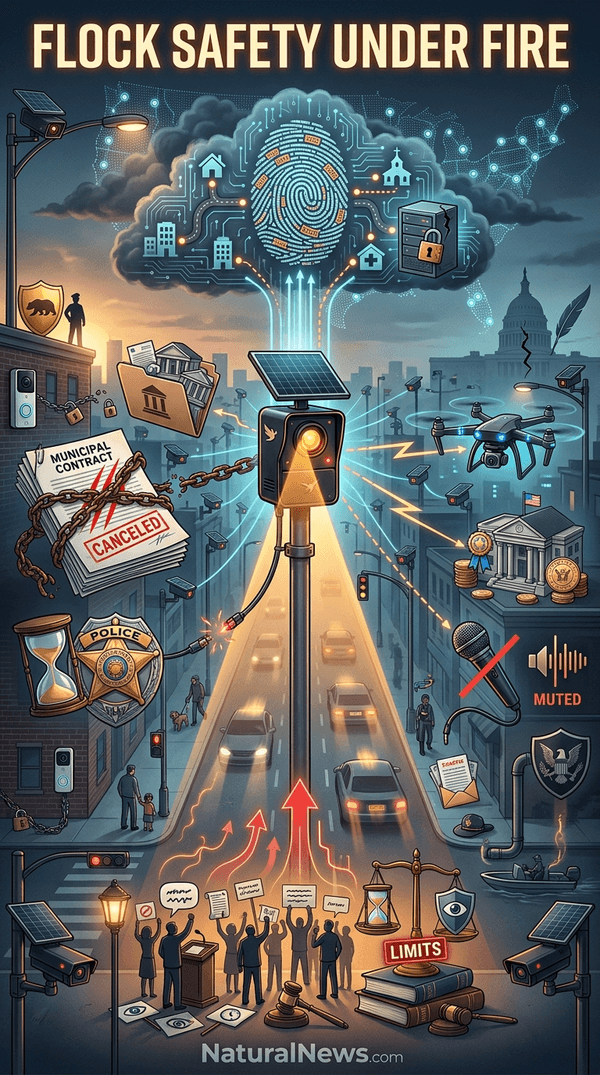
Explainer Infographic
Submit a correction >>
Tagged Under:
backlash, big government, California, california collapse, camera, Collapsifornia, crime, Flock Safety, ICE, law enforcement, license plate scanning, newsom, Orwellian, police state, policing, privacy watch, surveillance, watched
This article may contain statements that reflect the opinion of the author
RECENT NEWS & ARTICLES